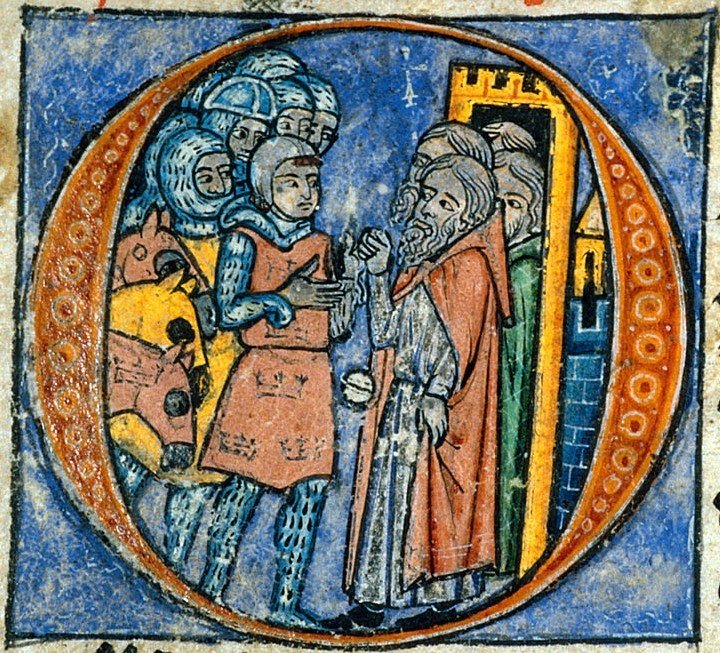
In this post, I explore the situation in Western Europe, particularly France, leading up to Pope Urban II’s call at Clermont in 1095. Understanding the social, political, and military conditions of the West on the eve of the First Crusade helps explain why so many responded to Urban’s call and why the First Crusade unfolded as it did.
Violence and Disorder in Medieval France
In tenth- and eleventh-century Europe, violence was endemic, and France offers a particularly vivid example. The feudal system was built on the presumption of perpetual warfare. Conflicts between local lords were common, and territorial disputes often escalated into violent confrontations. Life for ordinary people could be precarious, and the instruments of violence—trained warriors—were everywhere.
Boys from the knightly class were trained from an early age to fight. They learned to wear heavy armour, wield spears and swords, and endure the physical demands of combat. As M.W. Baldwin notes in Western Europe on the Eve of the First Crusade, such conditioning produced a population skilled in the art of war, which had been useful during the expansion of the Carolingian dynasty and against external threats like the Viking raids of the late eighth century. Yet once these threats diminished, these trained warriors often turned their energy inward, targeting those who could not defend themselves.
The disintegration of central authority exacerbated the problem. Political fragmentation created a power vacuum that local lords eagerly filled, raising private armies loyal primarily to themselves rather than the king. When these soldiers were not engaged in battles against rival lords, they often roamed freely, preying on peasants, merchants, and members of the clergy. H.E.J. Cowdrey emphasises that these bands of men were effectively unchecked, leaving ordinary people vulnerable to robbery, extortion, and violence.
In short, the combination of a militarized population and weak centralized authority created a dangerous environment. Those trained for war were left with few outlets other than raiding the countryside and enforcing their will through violence.
The Church Intervenes: The Peace of God
In response to this climate of disorder, the Church introduced the Peace of God movement. This initiative was both a spiritual and practical attempt to curb knightly violence and assert ecclesiastical authority where secular rulers had failed. Emerging in southern France in the late eleventh century, it became a system of councils, oaths, and protections designed to safeguard vulnerable members of society.
Senior clerics convened councils and invoked saints and relics to compel knights to uphold peace. The Peace of God decreed that the poor, clergy, and monks were under ecclesiastical protection and could not be harmed. Church property and the livelihoods of the poor were also shielded from violence. Unlike secular law, this authority was derived from bishops and church councils rather than kings.
The first Peace of God was proclaimed at Le Puy in 975, where Bishop Guy gathered clergy, knights, and peasants to hear their advice and enforce oaths of peace. A similar council was convened at Charroux in 990, and by the 1020s, most of France had come under the protection of these agreements. These councils established a framework for regulating violence and promoting social stability, even if enforcement was uneven.
Limiting Violence: The Truce of God
While the Peace of God focused on protecting people and property, the Truce of God sought to regulate when violence could occur. First proclaimed at the Council of Toulouges in 1027, the Truce prohibited all acts of violence from Saturday afternoon until Monday morning. Over the following decades, additional days were added, so that by the late eleventh century, only eight days a year were left without ecclesiastical restrictions on fighting.
Some historians, including Baldwin, argue that the Truce and Peace were not always respected by local lords, and violence persisted. Nevertheless, the Church’s attempts to intervene reveal the extent to which religious authority sought to manage and harness the martial energy of the knightly classes.
Why Didn’t the Church Ban Violence Altogether?
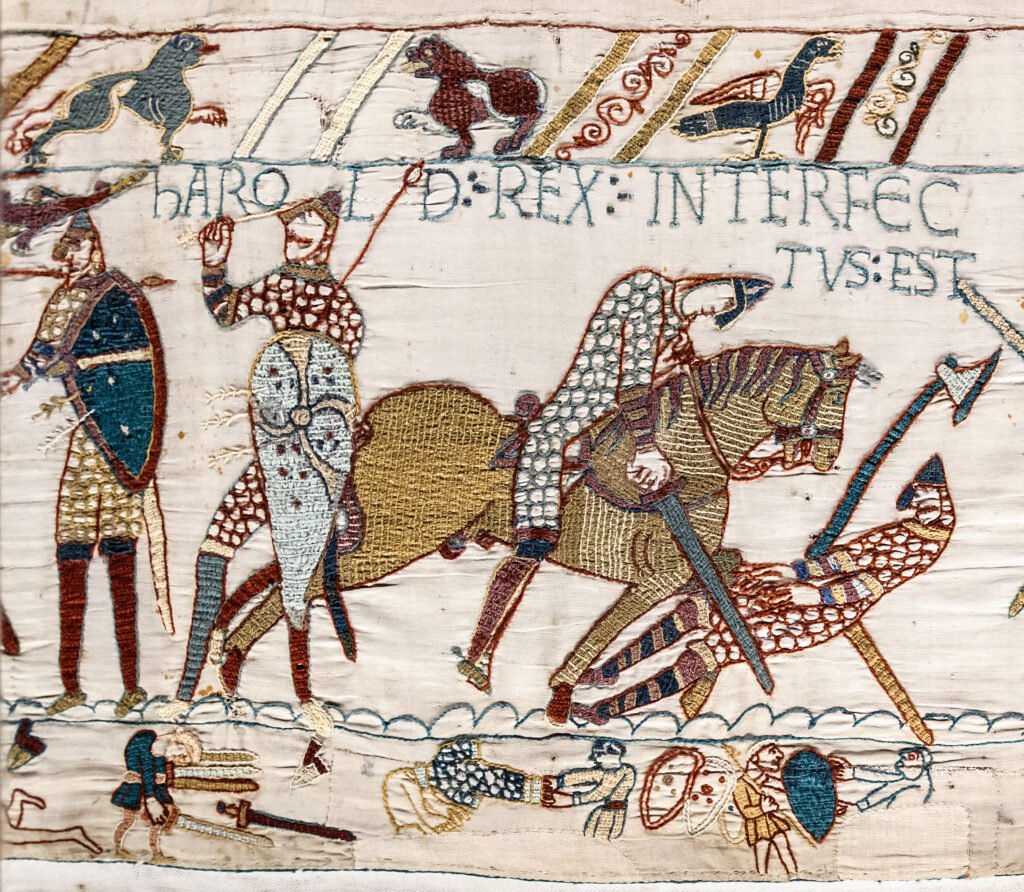
Knights and their martial skills were essential to society. Medieval feudalism was ordered into clear roles: peasants worked, clergy prayed, and knights fought. Warriors were necessary to defend territories, enforce authority, and even advance the interests of the Church. For example, Pope Leo IX personally raised an army in 1053 to campaign against the Normans in southern Italy, demonstrating the Church’s recognition of knights as a strategic resource.
Completely eliminating violence or the institution of knighthood was therefore impossible. Instead, the Church sought to limit violence, protect the vulnerable, and direct knightly aggression in ways that served both secular and religious aims. This framework helps us understand Pope Urban II’s call in 1095: by directing these trained warriors to the East, he could address both spiritual and political objectives, defending the Byzantine Empire, reclaiming Jerusalem, and perhaps removing dangerous elements from Western society.
Conclusion
The Peace and Truce of God movements illustrate the Church’s active role in restraining violence where secular authority had failed. They also reveal a society dominated by a martial elite, conditioned from youth to fight, whose energies Urban II would later mobilize for the First Crusade. Understanding this context is essential to appreciating why Western Europe was ready, willing, and able to respond to the call to crusade in 1095.
For further exploration, see my post on the situation in the East on the eve of the First Crusade.